The Stories We Grow

Over morning coffee last week, Matt and I found ourselves discussing childhood memories of EastEnders, Coronation Street and Emmerdale – the vaguely forbidden adult backdrop to our everyday 80s lives. Matt, it turns out, wasn’t allowed to watch EastEnders, but Emmerdale was ok. My brothers and I weren’t allowed to watch any of them. Even Grange Hill was off-limits as teenagers, never mind that it was designed for our exact age range. All that insolent drama was considered a Very Bad Influence.

Which is ironic, given the Oscar-worthy episodes that played out at home. Particularly since the most reliable barometer that real drama was afoot was when EastEnders came on the telly but Mum didn’t immediately switch it off – ergo, the fungal spores of a home-grown drama were about to explode.

But it did make me wonder: why do we like the stuff so much? I remember holidaying in the Canaries once and hearing the dulcet tones of the Coronation Street theme tune wafting from an upstairs beach apartment. It made me laugh that, wherever we go, we often take our dramas with us – literally and figuratively.

Of course, our appetite for drama long predates television. From myths and fairy tales to folklore and legends, humans have always told stories of peril, conflict, adventure and meaningful resolution.

And then there’s our own lives. We are story-led beings, forever connecting dots and casting characters. When something happens, we craft stories to make sense of it. When we feel hurt, our minds head straight for the director’s chair, casting a victim, a perpetrator and perhaps a passing saviour.

Mine’s often cast me in the leading role of a tragedy or a hero’s tale, back when I wore my dramas like prestigious medals. Yes, I’ve done my fair share of wallowing in fuss, gossip, tiffs, squabbles and argy-bargy, stubbornly submerged in my drama-filled pool like a water buffalo in its waterhole.

I often hear it in the gym changing rooms: ‘Did I tell you what Cheryl said to me the other day? The cheek of it! Well, she said that I said that he said that they said… and I was absolutely FUMING.’ And the other person invariably plays along with their assigned pantomime role: ‘No! That’s awful, you poor thing! How could she?’ Cheryl is Villain No. 1, our narrator is the Wronged Heroine, and the gym changing room has become the West End.

(No sexism intended; I just can’t easily access the male changing rooms.)

So what is it about these endlessly ravelling and unravelling human narratives that compels us so profoundly?  

I think it’s because stories have their own alchemy. Something happens to an experience when we turn it into a story. Stories can help us connect, share emotions and transmit ideas. We’ve used them across generations to distil experience into wisdom, warnings, morals and meaning.

But sometimes our storytelling is less ancient elixir and more George’s Marvellous Medicine: we keep stirring in ingredients until the thing grows so enormous its head bursts through the farmhouse roof.

The danger isn’t that our story is necessarily untrue, but that every telling can quietly alter its properties and proportions, like re-heating stew. What matters most is the meaning we attach to it, not the event itself. A hurt becomes an identity. A disagreement becomes a betrayal. The driver who cuts us up on the motorway becomes a murderous meathead, though for all we know they’re rushing a loved one to hospital. And the more often one tells a story, the more solid its casting becomes.

I know this because I’ve done it. In ‘Ducking Beneath the Sellotape’, I confessed to trying to recruit a comrade-in-arms who would second my casting and share in my outrage.

I’m slowly learning – with enough false starts and plot twists to make EastEnders proud – to take care with the stories I tell, both to myself and other people. Not to stop telling them, or to deny the difficult parts, but to notice what each telling grows.

Am I making something clearer, or merely making it bigger?

Not so I can live happily ever after, by the way – that’s another story altogether – but so I can tell mine with more conscious care.

The Beginning.
Erasing the Full Stop

Well, there I was, merrily writing away, absorbed in my enchanted sandpit of words: castles and moats galore, my hair and gusset full of sand, and not a care in the world.

Until I asked the wrong people for feedback.

When they told me my castles were “a bit much”, I quietly left the beach, my creative armbands losing air. I let the tide come in and wash my miniature kingdom away, turning my back on my inner sea.

The ebb came and went, inhaling and exhaling each day’s rich shore of possibility; fresh shells, new rockpools, shoals of will-o’-the-wisps all glistening hopefully. “Come back!” they cried, “We want to play!” But I refused, digging deeper into my own full-stop while those little wriggles of inspiration called in vain.

Until today, when Julia found my little red bucket and spade and threw them back onto the beach for me – plastic gauntlets of play. “It’s your homework”, she told me, smiling through her voicenote. “Write an essay on erasing the full stop.” At last, I had no excuse anymore! I was being told to build sandcastles for the pure fun of it. Who was I to disobey?!

After all, I hadn’t really been asking for feedback, had I?

I’d been asking for permission.

Darn it, I’d been checking – again – whether me and my wobbly creations were allowed, leaving the poor things to prove their worth against the waves. What a bloody drama queen!

I have always valiantly upheld the importance of feedback as a commitment to learning and growth: a point of honour; an exercise in humility. I thought it was noble and virtuous to expose myself to the cleansing winds of criticism.

What a foolish scourge, to sacrifice one’s creativity at the make-believe altar of another’s words.

As the Buddha said, “Even as a solid rock is unshaken by the wind, so are the wise unshaken by praise or blame”. Or as Julia put it, “I don’t want silly old feedback! I just want to do what I want to do.” (I can’t tell you how much I love her take on it!)

I’d hardly given my wonky castle of creativity a chance to settle in the sand before exposing it to the harsh waves of judgement, like unclothing a newborn on a mountaintop.

Really, Clare, did it need to be the moment the poor thing emerged, still blinking and bleating in shock? Freshly delivered from its warm, protected womb into the brittle glare of others’ creative blocks?

All that is new and unsure must be nurtured and protected awhile; given time to grow solid and steady roots.

Creativity is no different.

The Balinese have a ritual where newborns don’t touch the ground for the first three months of their lives. They are carried everywhere as sacred guests until they’re thought to be fully anchored into human life; only then are their feet ceremoniously placed upon the Earth.

I think I might take a leaf out of their book and welcome this guest into my life with a little more care before I plonk it in the dirty backyard of other people’s feedback. After all, when I first started writing my blog, I opened with this statement: “This blog is my intention to share – to open, to risk and to trust – and a commitment to authenticity; a practice of releasing self-expression as freely and lightly as I can, letting thistledown-thoughts drift gently in the breeze of this curious confetti of life experience.”

I didn’t mention asking for permission or making each seed prove its worth. And I’m hardly releasing them freely and lightly if I’m asking for others’ feedback, am I? I’m more like an anxious parent constantly calling my newly fledged teenager’s friends to check my little darling is safe!

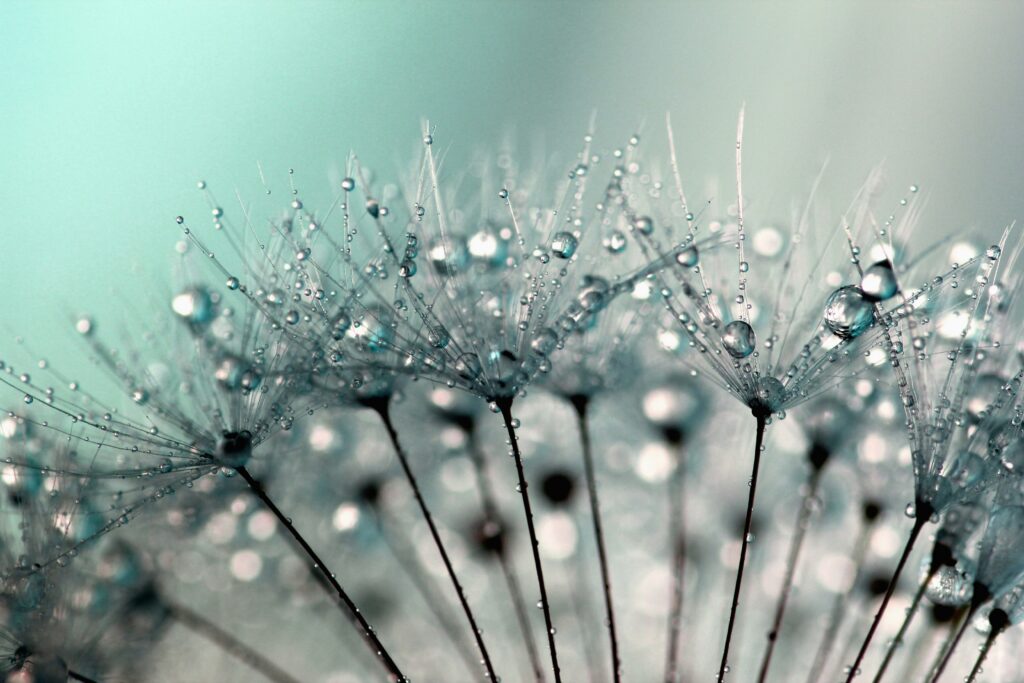
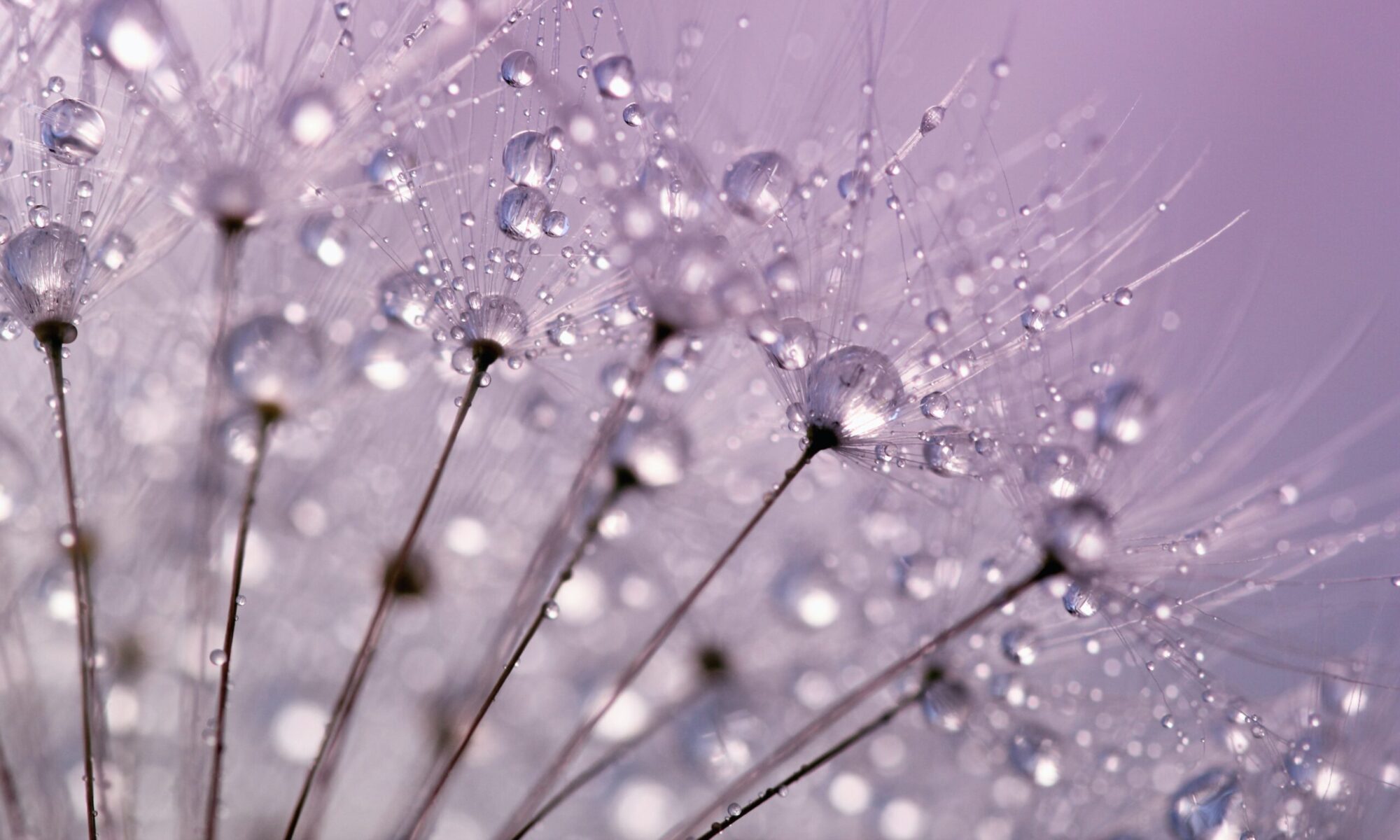
And would you believe it? As I’ve been writing this, not one, not two, but THREE thistledowns have drifted in through my attic window and across my desk.

Finding Narnia: The Wardrobe of Words

I’ve always loved the word crinkle… it has such happy, amiable edges! A charming breed of wrinkle; the friendliest of furrows. It’s so much more compelling than a fold but infinitely kinder than a pinch; the pleated softness of a smiling eye or the puckered crunch of a special-cut crisp. And unlike the meekly silent wrinkle, it has a distinctive voice too – a crackle, pop and ruckle. Such a perky onomatopoeic specimen, like tickle and wink; tiny slips of mischievousness tied up in little wriggles of ink. 

More and more, I’m realising the power of words. We don’t just speak them, we release them into the world like frogspawn; fertile pouches of punctuation that grow arms and legs, all squiggling far and free into the world. The language we birth drifts like plankton through the energetic ether, crossing vast reefs of ever-receptive anemones that digest and release their essence back into our teeming little rockpools of time and space.

Ah, the bawdy gleam of gobble or the sticky lewdness of secrete; the ringleted prettiness of curlicued or the thrilling, breathy sibilance of illicit! Hurrah for the stout clout of thick-witted and the bovine plod of placidity! Though I do pity that poor, misplaced militia (no such sibilant treat should describe something so mercenary and bleak; better a gooey, molten delicacy to be savoured for its sweetness!). So thank goodness for hullabaloo, kerfuffle and rapscallion, all doing exactly what they promised to.

As the 18th-century writer Samuel Johnson said, ‘Language is the dress of thought’. And for each of us, there is a Narnia-like wardrobe of words to explore and try on if we choose. No need to don the dreary sacking of a word like exercise; we can experiment with frills, fabrics and finery! As Candace Pert rightly notes in her book ‘Molecules of Emotion’, doesn’t ‘bodyplay’ sound infinitely more fun than exercise?!

Words can enhance and empower like Dynasty shoulder-pads or leave us chill-veined and shivery in our socks and pants: a sharp-suited ‘I will’ vs a threadbare ‘I might’. Words can protect us or expose us, feed or deplete us, nourish or sicken. Just like mushroom-picking, it’s best to choose with great care; the most tempting and accessible are often the most poisonous, and the rarest delicacies must be sniffed from the earth like buried truffles. 

And so they remain, waiting patiently for us to discover them, forgotten presents under the linguistic Christmas tree. Poor weevily, mawkish and gnarly, under-appreciated like the lesser-loved dwarfs in Sleeping Beauty; a motley collection of the roguish and downright grumpy!

Words are a buffet of coloured beads with which to string our necklace of meaning and a merry sandpit of sound-play. Try whispering oink, smudge or clunk like sumptuous jewels, or enunciating the engorged licentiousness of tumescence… oh haughtily naughty word, how I do love thee!

And like a box of beads, each word choice influences the next. Our first pick determines the shapes and colours that follow, and each bead threaded onto the necklace of our lexicon invites more of the same; miniature avalanches of associative energy tumbling endlessly into the jewellery of our subconscious. 

‘Struggle’ is a case in point – a sludgeonly word full of drudge-filled deadweight that I so often catch myself using. What if I choose something a little more flexible, like the fancy performance-wear athletes use? A breathable, moisture-wicking wonder that lets me prance and stretch freely, all while giving my buttocks a gratifying-perky lift?! What if I’m not struggling (which sounds arduous and futile), but rummaging – delving delightedly through the great jumble-sale of life’s possibilities towards those abandoned, mothballed treasures of truth? Yes, that feels better!

And since feelings are the fruiting bodies of our thoughts, the language we think and speak in spreads its spores like fungi; great cankers can bloom forth if we’re careless with our choices. A word’s resonance can spread underground like honey fungus, withering our roots and inner wood.

So may we all be truffle-hogs instead, digging out the subterranean treasures rather than grasping at the familiar toadstools of our lexicon!

And may I rummage through my words the way I do through my tin of Quality Street…

Photo by Aaron Burden on Unsplash

I welcome all comments! If you would like to share your thoughts on this post, please click here and scroll to the bottom of the page to enter them in the comment box.

Jewels in the Turd

As I walked barefoot across the lawn this morning, delighting in the nodding pestemons and bee-deep lavender, my pleasure was interrupted by an abrupt encounter with a small turd.

Fear not, I didn’t step in it. But oh, what a rude little serpent of distaste! Like the discovery of an overripe spot on your nose after a languid Sunday lie-in with a bright new lover, its presence spat me fatly out of my romantic reverie.

The young turd stared boldly back, throwing down the gauntlet of bad decorum and willing this old fogey to make a fuss.

 ‘Bloody cats!’ spluttered my mind, self-righteous with dirty-disdain.

A pause. A recognition. A chuckle. What codswallop, I adore my feline friends! So why this knee-jerk indignity at nature’s ways? 

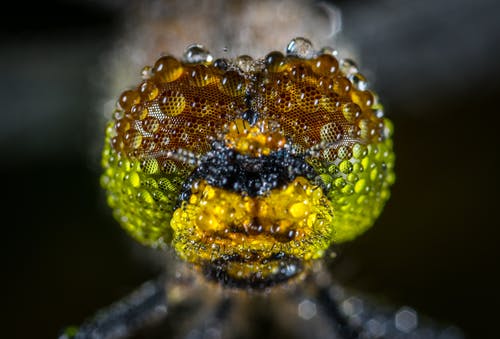
I looked again. Noticed the sheen of bluebottles clustered on its crust in earnest industry.

And realised: Life is teeming with such moments of choice, the majority made unconsciously. I could choose to see a turd covered in flies and play the tired old record of disgust.

Or…

I could choose to see a banquet of living jewels, dazzling in iridescent dinner jackets at their giant ochre feast! To wonder at the crusade of little winged recycling-champions going about their permacultured day.

I took a moment to admire the beady sequins of their bodies with their taut metallic glaze; marvel at the little mascara-brushed eyelashes of their legs and the maroon globes either side of bomber-pilot helmets, the stunning complexity of their minutely pixelated eyes.

I’ve always been tickled by the saying, ‘You can’t polish a turd, but you can roll it in glitter’.

I’m even more delighted to realise there’s no need. Nature sends them their very own living sequins – with miniature delivery-wings no less! Oh tiny fecal fairies, if we consciously clean our minds of prejudices, judgments and beliefs we can see how miraculous you are, and the parable of truth you represent.

Just like the Universe, flies lay their eggs in life’s excrement because it’s such rich nutrition for growth.  So no matter how unpleasant things seem, there’s always a hot steam of transformation in every cowpat and a glitter of jewels on every turd.

The trick is to take off our smeary mind goggles.

And learn to truly see.

I welcome all comments! If you would like to share your thoughts on this post, please click here and scroll to the bottom of the page to enter them in the comment box.